Competitive Analysis Framework · CHAPTER 5 OF 6

Core features and differentiation

Step 5 Identify Core Features

Bring All Competitors Together

After adding competitor overviews, SWOT analysis, resources, and screenshots, bring all competitors into one comparison view.

​

This helps you see what most competitors are offering and what has become standard in the market.

Illustration accompanying Bring All Competitors Together

Bring All Competitors Together

After adding competitor overviews, SWOT analysis, resources, and screenshots, bring all competitors into one comparison view.

This helps you see what most competitors are offering and what has become standard in the market.
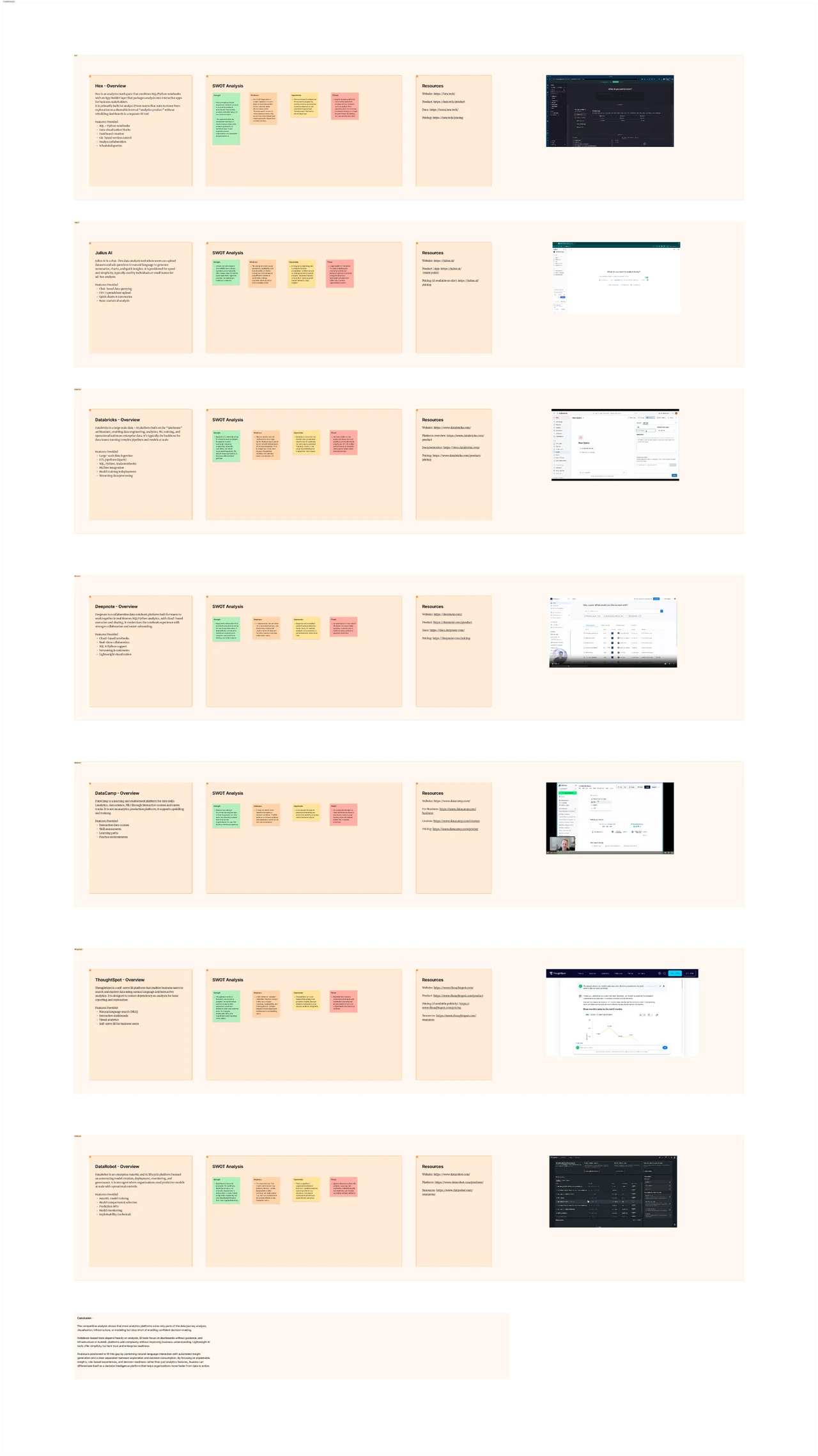

Illustration accompanying Bring All Competitors Together

What Are Core Features?

Core features are the capabilities provided by most or all competitors in the market.

​

They are not differentiators.

​

They are the basic features users expect from products in that category.

Competitor 2

Competitor 3

Competitor 1

What Are Core Features?: Competitor 2 Competitor 3 Competitor 1

What Are Core Features?

Core features are the capabilities provided by most or all competitors in the market.

They are not differentiators.

They are the basic features users expect from products in that category.

Competitor 2

Competitor 3

Competitor 1

What Are Core Features?: Competitor 2 Competitor 3 Competitor 1

Example: Core Features in HR Software

For an enterprise HR platform, core features may include:

Example: Core Features in HR Software: Employee management Performance management Employee self-service Leave management Attendance Payroll Recruitment Onboarding Reporting Approvals

Employee management

Example: Core Features in HR Software: Employee management Performance management Employee self-service Leave management Attendance Payroll Recruitment Onboarding Reporting Approvals

Performance management

Example: Core Features in HR Software: Employee management Performance management Employee self-service Leave management Attendance Payroll Recruitment Onboarding Reporting Approvals

Employee self-service

Example: Core Features in HR Software: Employee management Performance management Employee self-service Leave management Attendance Payroll Recruitment Onboarding Reporting Approvals

Leave management

Example: Core Features in HR Software: Employee management Performance management Employee self-service Leave management Attendance Payroll Recruitment Onboarding Reporting Approvals

Attendance

Example: Core Features in HR Software: Employee management Performance management Employee self-service Leave management Attendance Payroll Recruitment Onboarding Reporting Approvals

Payroll

Example: Core Features in HR Software: Employee management Performance management Employee self-service Leave management Attendance Payroll Recruitment Onboarding Reporting Approvals

Recruitment

Example: Core Features in HR Software: Employee management Performance management Employee self-service Leave management Attendance Payroll Recruitment Onboarding Reporting Approvals

Onboarding

Example: Core Features in HR Software: Employee management Performance management Employee self-service Leave management Attendance Payroll Recruitment Onboarding Reporting Approvals

Reporting

Example: Core Features in HR Software: Employee management Performance management Employee self-service Leave management Attendance Payroll Recruitment Onboarding Reporting Approvals

Approvals

Example: Core Features in HR Software

For an enterprise HR platform, core features may include:

Example: Core Features in HR Software: Employee management Performance management Employee self-service Leave management Attendance Payroll Recruitment Onboarding Reporting Approvals

Employee management

Example: Core Features in HR Software: Employee management Performance management Employee self-service Leave management Attendance Payroll Recruitment Onboarding Reporting Approvals

Performance management

Example: Core Features in HR Software: Employee management Performance management Employee self-service Leave management Attendance Payroll Recruitment Onboarding Reporting Approvals

Employee self-service

Example: Core Features in HR Software: Employee management Performance management Employee self-service Leave management Attendance Payroll Recruitment Onboarding Reporting Approvals

Leave management

Example: Core Features in HR Software: Employee management Performance management Employee self-service Leave management Attendance Payroll Recruitment Onboarding Reporting Approvals

Attendance

Example: Core Features in HR Software: Employee management Performance management Employee self-service Leave management Attendance Payroll Recruitment Onboarding Reporting Approvals

Payroll

Example: Core Features in HR Software: Employee management Performance management Employee self-service Leave management Attendance Payroll Recruitment Onboarding Reporting Approvals

Recruitment

Example: Core Features in HR Software: Employee management Performance management Employee self-service Leave management Attendance Payroll Recruitment Onboarding Reporting Approvals

Onboarding

Example: Core Features in HR Software: Employee management Performance management Employee self-service Leave management Attendance Payroll Recruitment Onboarding Reporting Approvals

Reporting

Example: Core Features in HR Software: Employee management Performance management Employee self-service Leave management Attendance Payroll Recruitment Onboarding Reporting Approvals

Approvals

Compare With Your Product

Once core features are listed, compare them with the software you are redesigning.

This helps you understand where the product currently stands against the market.

Which features already exist?

Which features are missing?

Which features are weak?

Which features need improvement?

Identify

Compare With Your Product

Once core features are listed, compare them with the software you are redesigning.

This helps you understand where the product currently stands against the market.

Which features already exist?

Which features are missing?

Which features are weak?

Which features need improvement?

Identify

Core Features Match the Market

They make the product competitive enough to stay relevant.

​

If an important core feature is missing, suggest adding it during redesign before trying to differentiate.
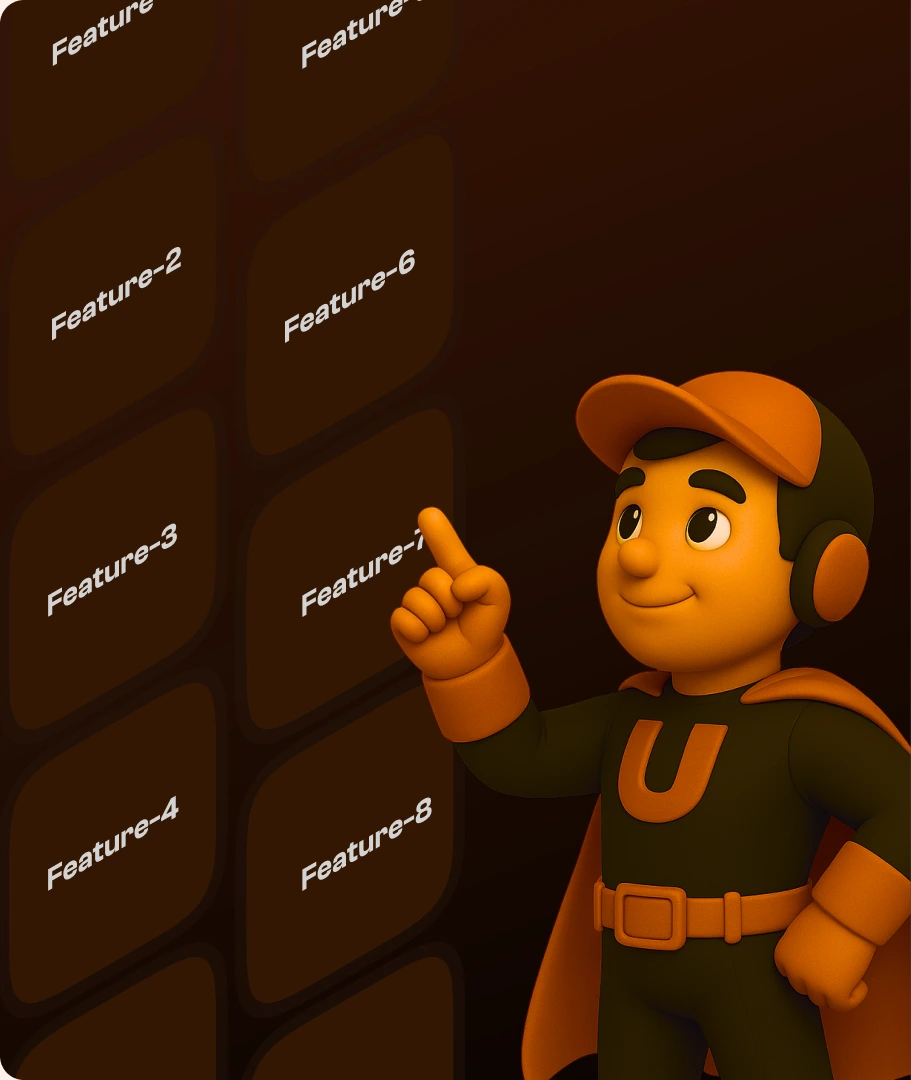
Core software features arranged on tilted cards.

Feature-1

Feature-2

Feature-3

Feature-4

Persona 5

Persona 6

Feature-5

Feature-6

Feature-7

Feature-8

Persona 1

Core Features Match the Market

They make the product competitive enough to stay relevant.

If an important core feature is missing, suggest adding it during redesign before trying to differentiate.

Core software features arranged on tilted cards.

Feature-1

Feature-2

Feature-3

Feature-4

Persona 5

Persona 6

Feature-5

Feature-6

Feature-7

Feature-8

Persona 1

Step 6 Identify Standout Features

Competitor 1

Competitor 2

Competitor 3

Competitor 4

Your
Software

Competitor 5

Competitor 6

Competitor 7

Competitor 8

Find What Can Make the Product Stand Out

The final part of competitive analysis is about finding opportunities that can make the software stronger in the market.

​

By this stage, we understand what competitors do well, where they fall short, and where users still face gaps.

​

These insights can help us identify standout features.

Find What Can Make the Product Stand Out

The final part of competitive analysis is about finding opportunities that can make the software stronger in the market.

By this stage, we understand what competitors do well, where they fall short, and where users still face gaps.

These insights can help us identify standout features.

Competitor 1

Competitor 2

Competitor 3

Competitor 4

Your
Software

Competitor 5

Competitor 6

Competitor 7

Competitor 8

Move Beyond Basic Features: Missing workflows Manual dependencies Extra tools users rely on Unsolved user needs Methods users already trust Repeated work

Missing workflows

Move Beyond Basic Features: Missing workflows Manual dependencies Extra tools users rely on Unsolved user needs Methods users already trust Repeated work

Manual dependencies

Move Beyond Basic Features: Missing workflows Manual dependencies Extra tools users rely on Unsolved user needs Methods users already trust Repeated work

Extra tools users rely on

Move Beyond Basic Features: Missing workflows Manual dependencies Extra tools users rely on Unsolved user needs Methods users already trust Repeated work

Unsolved user needs

Move Beyond Basic Features: Missing workflows Manual dependencies Extra tools users rely on Unsolved user needs Methods users already trust Repeated work

Methods users already trust

Move Beyond Basic Features: Missing workflows Manual dependencies Extra tools users rely on Unsolved user needs Methods users already trust Repeated work

Repeated work

Move Beyond Basic Features: Missing workflows Manual dependencies Extra tools users rely on Unsolved user needs Methods users already trust Repeated work

To find them, look for:

Move Beyond Basic Features

Core features help the product match the market standard. Standout features help the product go beyond the market standard.

Move Beyond Basic Features

Core features help the product match the market standard. Standout features help the product go beyond the market standard.

To find them, look for:

Move Beyond Basic Features: Missing workflows Manual dependencies Extra tools users rely on Unsolved user needs Methods users already trust Repeated work

Missing workflows

Move Beyond Basic Features: Missing workflows Manual dependencies Extra tools users rely on Unsolved user needs Methods users already trust Repeated work

Unsolved user needs

Move Beyond Basic Features: Missing workflows Manual dependencies Extra tools users rely on Unsolved user needs Methods users already trust Repeated work

Manual dependencies

Move Beyond Basic Features: Missing workflows Manual dependencies Extra tools users rely on Unsolved user needs Methods users already trust Repeated work

Methods users already trust

Move Beyond Basic Features: Missing workflows Manual dependencies Extra tools users rely on Unsolved user needs Methods users already trust Repeated work

Extra tools users rely on

Move Beyond Basic Features: Missing workflows Manual dependencies Extra tools users rely on Unsolved user needs Methods users already trust Repeated work

Repeated work

Example: Reducing Tool Dependency

In one dossier management project, users could create, review, and approve documents inside the software.

​

But they still needed another tool to convert the approved document into eCTD format.

​

So we integrated eCTD conversion and download into the product, making the workflow complete in one place.

Illustration accompanying Example: Reducing Tool Dependency

Example: Reducing Tool Dependency

In one dossier management project, users could create, review, and approve documents inside the software.

But they still needed another tool to convert the approved document into eCTD format.

So we integrated eCTD conversion and download into the product, making the workflow complete in one place.

Illustration accompanying Example: Reducing Tool Dependency

Category - 1

Category - 2

Category - 3

Category - 4

Category - 5

Category - 6

Fish Bone Method:

Cause

Cause

Cause

Cause

Cause

Cause

Cause

Cause

Cause

Cause

Effect

Example: Bringing Trusted Methods Into the Product: Category - 1 Category - 2 Category - 3 Category - 4 Category - 5 Category - 6 Fish Bone Method: Cause Cause Cause Cause Cause Cause Cause Cause Cause Cause Effect

Example: Bringing Trusted Methods Into the Product

In one pharma investigation product, users relied on trusted methods like fishbone analysis to identify root causes.

​

Competitors had not built these methods into the software.

​

So we integrated them into the workflow, helping users investigate without switching tools.

Example: Bringing Trusted Methods Into the Product

In one pharma investigation product, users relied on trusted methods like fishbone analysis to identify root causes.

Competitors had not built these methods into the software.

So we integrated them into the workflow, helping users investigate without switching tools.

Category - 1

Category - 2

Category - 3

Category - 4

Category - 5

Category - 6

Fish Bone Method:

Cause

Cause

Cause

Cause

Cause

Cause

Cause

Cause

Cause

Cause

Effect

Example: Bringing Trusted Methods Into the Product: Category - 1 Category - 2 Category - 3 Category - 4 Category - 5 Category - 6 Fish Bone Method: Cause Cause Cause Cause Cause Cause Cause Cause Cause Cause Effect

Standout Features Come From Real Workflow Gaps

What users already do

Where competitors fall short

What information is shown first

What edge cases are handled

Which tools users depend on

Which steps create friction

What can be brought into the product

They come from understanding:

The best differentiation opportunities are not random ideas. That is how competitive analysis turns into stronger product direction.

Standout Features Come From Real Workflow Gaps

The best differentiation opportunities are not random ideas. That is how competitive analysis turns into stronger product direction.

They come from understanding:

What users already do

Where competitors fall short

What information is shown first

What edge cases are handled

Which tools users depend on

Which steps create friction

What can be brought into the product

Carry These Insights Into the UX Audit

Competitive analysis does not end with research.

​

The findings should carry forward into the UX audit.

​

They help the team identify what is missing, what needs improvement, and which opportunities should shape the redesign.


Illustration accompanying Carry These Insights Into the UX Audit

Carry These Insights Into the UX Audit

Competitive analysis does not end with research.

The findings should carry forward into the UX audit.

They help the team identify what is missing, what needs improvement, and which opportunities should shape the redesign.

Illustration accompanying Carry These Insights Into the UX Audit

FRAMEWORK CONTENTS

Competitive Analysis Framework

Search documentation

Search scope

Search across all eight guides.

Diagram detail